
Herbal Medicines for Depression, Anxiety & Cognitive Decline: Can Nature Support Brain Health?
Mental health disorders such as depression, anxiety, and cognitive decline are becoming increasingly common worldwide. Alongside conventional medicine, interest in herbal remedies has grown because many traditional medicinal plants have shown promising effects on brain health and emotional well-being.
How Herbs Influence Mental Health
Modern research suggests that medicinal herbs may support neurological and psychological health through several important mechanisms:
Modulation of Neurotransmitters
Many herbs influence neurotransmitters such as serotonin, dopamine, GABA, and acetylcholine. These chemicals play a major role in mood regulation, relaxation, memory, and cognitive performance.

Antioxidant and Anti-inflammatory Effects
Oxidative stress and inflammation are strongly associated with depression, anxiety, and neurodegenerative diseases. Herbal compounds rich in antioxidants may help protect brain cells and reduce inflammation.
Regulation of the HPA Axis
Adaptogenic herbs such as Ashwagandha, Rhodiola, and Holy Basil may help regulate cortisol levels and reduce the harmful effects of chronic stress on the body and mind.
Promotion of Neuroplasticity
Certain herbs can increase Brain-Derived Neurotrophic Factor (BDNF), a protein associated with neuronal growth, learning, and memory formation.
Protection Against Neurodegeneration
Several medicinal plants have shown neuroprotective effects in experimental studies related to Alzheimer’s and Parkinson’s disease by reducing beta-amyloid accumulation, oxidative damage, and neuronal degeneration.

Important Medicinal Herbs for Brain Health
Ashwagandha (Withania somnifera)
Ashwagandha is one of Ayurveda’s most valued rejuvenating herbs, traditionally used for stress reduction, vitality, and mental resilience.

Key Constituents
Withanolides, withaferin A, alkaloids
Potential Benefits
• Helps regulate cortisol levels• Supports relaxation through GABAergic activity• Reduces oxidative stress in brain tissue• May improve neuroplasticity and cognitive resilience through BDNF support
Clinical studies have shown Ashwagandha may significantly reduce symptoms associated with anxiety and depression.
Brahmi (Bacopa monnieri)
Brahmi has traditionally been used in Ayurveda as a “Medhya Rasayana,” meaning a herb that supports intellect, memory, and concentration.
Key Constituents
Bacosides A & B, alkaloids, flavonoids
Potential Benefits
• Enhances synaptic communication• Supports memory consolidation• Improves cerebral blood flow• Provides antioxidant and neuroprotective effects
Research indicates Brahmi may improve attention span, working memory, and cognitive processing.

Shankhpushpi (Convolvulus pluricaulis)
Traditionally used as a brain tonic, Shankhpushpi is commonly recommended for anxiety, sleeplessness, and mental fatigue.

Key Constituents
Alkaloids, flavonoids, glycosides
Potential Benefits
• Mild calming and anxiolytic effects• Supports memory and learning• Helps reduce oxidative stress in brain tissues
Preclinical studies suggest it may function as a natural nootropic and anti-anxiety herb.
Gotu Kola (Centella asiatica)

Gotu Kola is widely used in Ayurveda and Traditional Chinese Medicine to support cognitive function, especially in aging individuals.
Key Constituents
Asiaticoside, madecassoside, flavonoids
Potential Benefits
• Promotes neurite growth and regeneration• Supports blood circulation to the brain• May reduce anxiety and depressive symptoms
Human studies suggest improvements in memory and anxiety reduction, particularly among elderly individuals.
Turmeric (Curcuma longa)

Turmeric has long been used in Indian households for its anti-inflammatory and rejuvenating properties.
Key Constituent
Curcumin
Potential Benefits
• Helps reduce neuroinflammation• Supports serotonin and dopamine availability• Encourages neurogenesis and neuronal protection
Some studies suggest curcumin may show antidepressant effects comparable to certain SSRIs in mild cases.
Holy Basil (Ocimum sanctum)

Holy Basil, also known as Tulsi, is revered in Indian tradition for promoting calmness and mental clarity.
Key Constituents
Eugenol, ursolic acid, rosmarinic acid
Potential Benefits
• Helps reduce stress and cortisol levels• Supports emotional balance• May improve mental performance and reduce fatigue
Clinical studies have shown positive effects on stress reduction and cognitive performance.
Jatamansi (Nardostachys jatamansi)

Jatamansi has traditionally been used for insomnia, nervous disorders, and emotional imbalance.
Key Constituents
Jatamansone, sesquiterpenes
Potential Benefits
• Supports relaxation through GABA-A receptor activity• Helps calm the nervous system• May improve sleep quality and reduce oxidative stress
Traditional use and preliminary studies support its calming and neuroprotective properties.
Ginkgo (Ginkgo biloba)

Ginkgo has been extensively studied for memory enhancement and improved cerebral circulation.
Key Constituents
Ginkgolides, bilobalide, flavonoids
Potential Benefits
• Increases blood flow to the brain• Supports memory and cognitive function• Provides antioxidant neuroprotection
Research has shown positive outcomes in mild cognitive impairment and Alzheimer’s disease-related cognitive decline.
Lemon Balm (Melissa officinalis)

Lemon Balm is traditionally used in Western herbal medicine for calming and mood-supportive effects.
Key Constituents
Rosmarinic acid, citral, flavonoids
Potential Benefits
• Supports GABA activity• Helps reduce stress and irritability• May improve sleep and relaxation
Clinical studies support its use for mild anxiety and stress-related insomnia.
Herbal Research in Alzheimer’s Disease

Research into plant-derived compounds for Alzheimer’s disease continues to grow. Several plant-based compounds have either received FDA approval or are currently undergoing clinical investigation.
Examples include:
• Rivastigmine derived from Physostigma venenensis• Galantamine derived from Lycoris radiata• Resveratrol from Vitis vinifera• Huperzine A from Huperzia serrata• Curcumin from Curcuma longa
These compounds are being studied for their effects on acetylcholine activity, beta-amyloid reduction, oxidative stress, and cognitive support.
Understanding Cognitive Decline and Alzheimer’s Disease
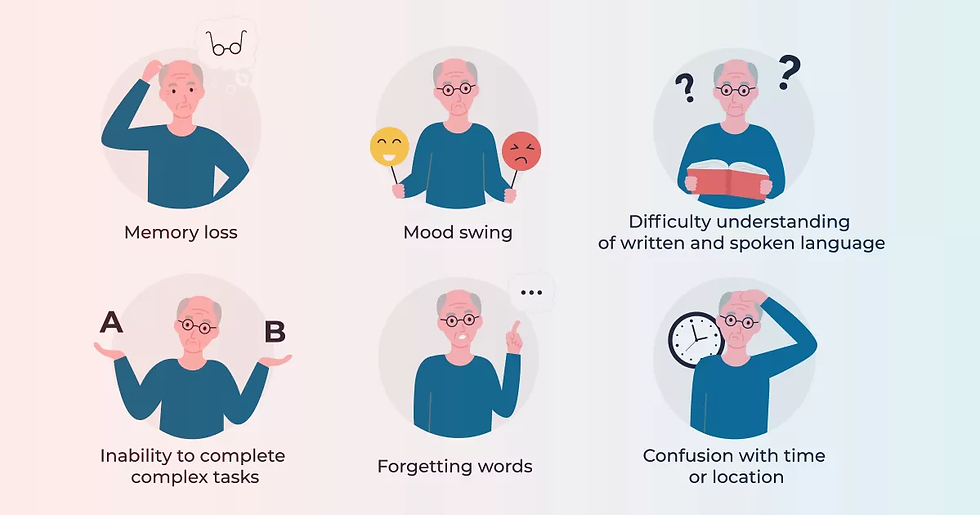
Alzheimer’s disease is associated with progressive memory loss, cognitive dysfunction, confusion, behavioral changes, and reduced independence. Mood disturbances and depression are also common during the early stages of the disease.
Researchers continue to investigate several mechanisms involved in Alzheimer’s disease, including:
• Cholinergic dysfunction• Amyloid plaque accumulation• Tau protein abnormalities• Oxidative stress• Insulin resistance• CREB signaling dysfunction
Conclusion
Traditional medicinal plants continue to attract scientific attention for their potential role in supporting emotional balance, cognitive performance, and neuroprotection. While many herbs show promising results in clinical and preclinical research, they should not replace professional medical treatment for serious psychiatric or neurological conditions.
A balanced approach that combines healthy lifestyle practices, stress management, proper nutrition, and evidence-based herbal support may offer meaningful benefits for long-term brain health.


Comments