
Obesity: An Introduction and What We Can Do (Part 2)
- 11 hours ago
- 4 min read
Fat Cells (Adipocytes)
During weight gain, fat cells (adipocytes) grow in size, a process known as hypertrophy. Once these cells reach their storage capacity, the body begins creating new fat cells, called hyperplasia. These cells undergo epigenetic changes that “remember” being enlarged, which often drives rapid weight regain even after dieting.

The Cellular Mechanics of Fat Storage
Hypertrophy vs. Hyperplasia
Initially, existing fat cells swell to store excess caloric energy. In severe or prolonged obesity, the body recruits stem cells to create new fat cells.

Hypertrophy
When energy intake exceeds expenditure, existing fat cells increase in size as they store excess lipids.
Hyperplasia
In severe obesity, the body recruits new fat cells from stem cells (including those in bone marrow) to manage excess energy storage, increasing the total number of fat cells.
Cellular “Memory”
Research shows that fat cells and their precursor cells retain epigenetic marks of past obesity. This causes them to store nutrients more readily and predisposes them to rapid regrowth, making sustained weight loss difficult.

Lipid Turnover
In individuals living with obesity, lipid turnover inside fat cells decreases. The cells absorb lipids efficiently but release them slowly, resulting in net tissue growth.

Why Fat Becomes Harmful

Chronic Inflammation
As fat cells expand, they outgrow their blood supply and begin producing pro-inflammatory proteins such as TNF-α and IL-6. This leads to low-grade systemic inflammation.
Metabolic Dysfunction
Inflamed fat tissue struggles to store lipids effectively, causing “spillover” into the liver and muscles. This significantly increases the risk of:
Type 2 diabetes
Insulin resistance
Cardiovascular disease
Fat Distribution
Visceral fat, stored around internal abdominal organs, is metabolically more active and dangerous than subcutaneous fat stored under the skin.
Causes of Obesity
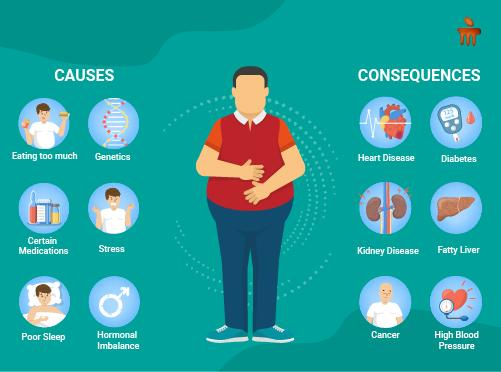
Genetics
Single-gene mutation (monogenic) obesity is rare and occurs in less than 1% of cases. Most identified mutations are linked to the leptin-melanocortin pathway and may be present in up to 6% of individuals with severe childhood-onset obesity.
Environment
Poverty, social factors, work profiles, and lifestyle conditions are significant contributors.
Energy Balance

Food intake is converted into energy in the body. Since people are not constantly eating, energy is stored to meet the body’s demands.
Resting metabolic rate (RMR), the number of calories the body burns at rest just to survive, accounts for approximately 70% of total energy expenditure and is closely correlated with fat-free mass.
The remaining energy expenditure comes from:
Thermic effect of food
Physical activity
Specific hormonal and neurological pathways regulate these domains and may play an important role in obesity.
Gastric Sensory Functions
The stomach provides important information regarding meal quantity and controls the rate at which food enters the small intestine through a process called gastric emptying (GE).

Gastric Distention
Regardless of caloric content, stomach distention provides negative feedback in food intake regulation.
Distention:
Decreases appetite
Reduces food intake
Correlates with tolerated gastric volume and body weight
Gastric Motor Function
Gastric emptying controls the transit of food from the stomach to the intestine and influences signaling processes related to hunger and satiety.
Research shows:
Accelerated gastric emptying is associated with obesity
Rapid GE is linked with increased hunger
Altered satiety contributes to weight gain
Enteric and Adipose Hormones
When food enters the duodenum, nutrients stimulate enteroendocrine cells to release hormones that regulate appetite and stomach motility.
Some hormones stimulate appetite (orexigenic), while others promote satiety (anorexigenic).
Leptin and Ghrelin in Appetite Regulation

Leptin and ghrelin are two key hormones with opposing functions.
Ghrelin
Stimulates appetite
Activates orexigenic neurons
Increases food intake
Leptin
Suppresses appetite
Reduces food intake
Promotes satiety
Increases energy expenditure
In many individuals with obesity, high leptin levels fail to produce the expected response. This condition is called leptin resistance and remains a major challenge in obesity treatment.
Adipose Tissue
Leptin
Leptin is primarily produced by adipocytes and closely correlates with white adipose tissue mass.
Weight loss and fasting reduce leptin levels. Leptin also influences:
Thermogenesis
Energy expenditure
Neuroendocrine signaling
Adiponectin
Adiponectin is produced exclusively by adipocytes and plays a major role in:
Insulin sensitivity
Lipid regulation
Fatty acid oxidation
Lower adiponectin levels are associated with:
Obesity
Visceral fat accumulation
Diet and weight loss can increase adiponectin concentrations.
Central Regulation
The central nervous system receives signals from:
Autonomic pathways
Hormones
Circulating nutrients
Important hormones include:
Leptin
CCK
GLP-1
PYY3-36
Multiple brain regions integrate these signals to regulate appetite and energy balance.
Obesity Pathophysiology and Morbidity

Positive energy balance leads to excess calorie storage in adipose tissue. Excess adiposity contributes to:
Metabolic dysfunction
Chronic inflammation
Immune changes
Mechanical stress
Major obesity-related comorbidities include:
Cardiovascular disease (CVD)
Type 2 diabetes mellitus (T2DM)
Cancer
Dyslipidemia and Inflammation
Obesity is associated with systemic and local inflammation.
Studies show increased secretion of inflammatory cytokines such as:
IL-6
TNF-α
Obesity-related adipose tissue also demonstrates:
Increased macrophage infiltration
Increased T-cell activity
Immune dysregulation
These changes contribute to insulin resistance and cardiometabolic disease.
Insulin Resistance

The inflammatory environment associated with obesity disrupts insulin signaling through multiple mechanisms.
Inflammatory cytokines:
Alter insulin receptor signaling
Reduce glucose uptake
Promote further inflammation
Changes in insulin signaling affect:
Skeletal muscle
Liver
Glucose homeostasis
Animal studies demonstrate that suppression of inflammatory pathways can protect against insulin resistance.
Metabolically “Healthy” and “Unhealthy” Obesity

Individuals with obesity and metabolic dysfunction are considered metabolically unhealthy.
Indicators include:
Dyslipidemia
Hypertension
Insulin resistance
Elevated inflammatory markers
Approximately 30% of individuals with obesity may be considered metabolically healthy.
However, metabolic dysfunction significantly increases future cardiovascular risk.
Central Adiposity
Central obesity is strongly associated with:
Cardiovascular disease
Metabolic syndrome
Insulin resistance
Research shows waist circumference predicts:
Hypertension
Type 2 diabetes
Dyslipidemia
More accurately than BMI alone.
Central obesity is also associated with worse outcomes in critical illness.
Sarcopenic Obesity
Sarcopenic obesity is characterized by:
Obesity
Reduced muscle mass or muscle function
It may occur with or without central adiposity.
Contributing factors include:
Physical inactivity
Hormonal changes
Chronic inflammation
Myocellular changes
Diagnosis is typically based on:
Muscle mass measurements
Strength testing


Comments